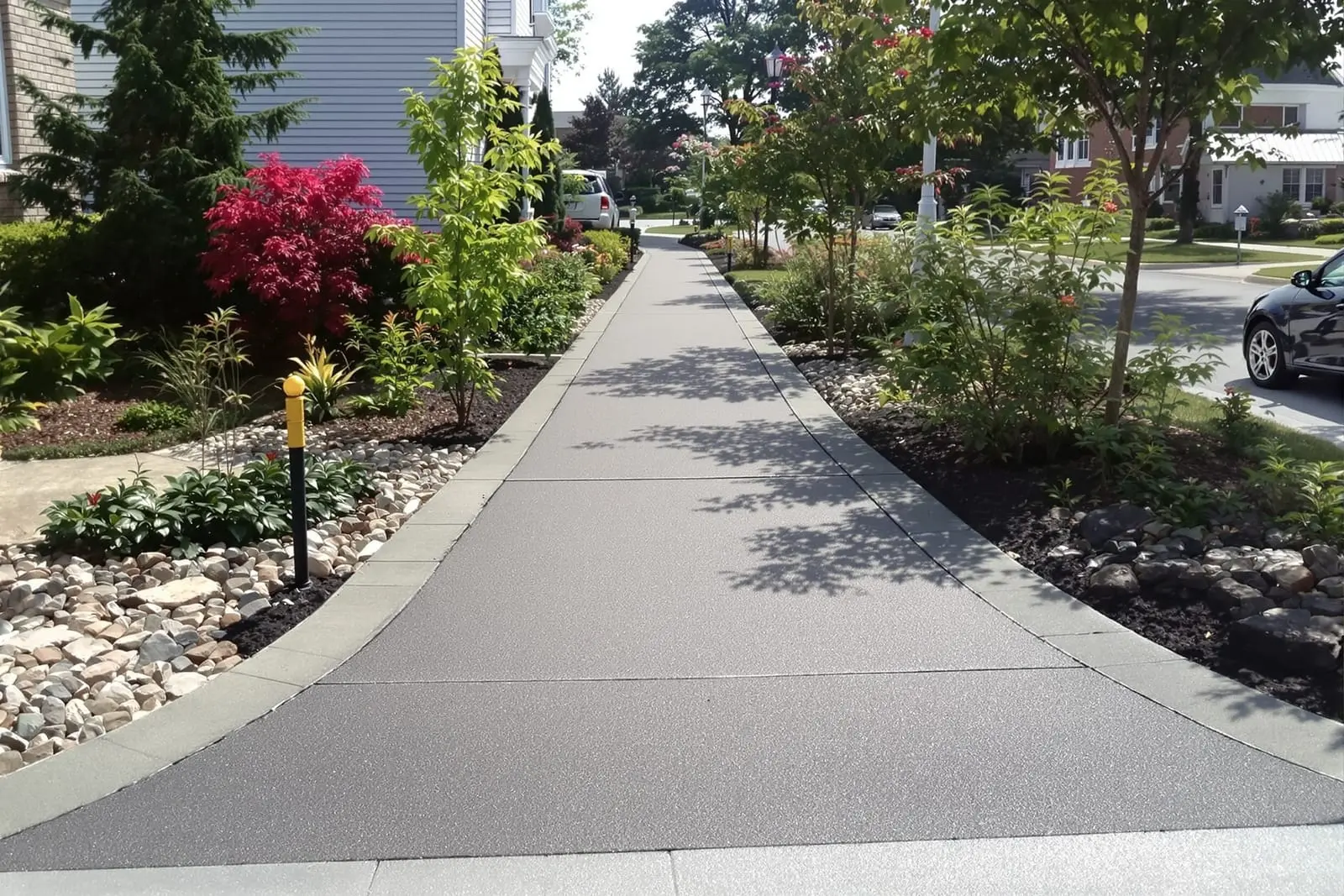
Create safe, ADA friendly routes with asphalt sidewalks and trails in Pittsburgh, PA. We build pathways for parks, schools, campuses, and commercial properties. Our designs balance function and appearance while managing drainage and long term durability.
Prestige Asphalt Pittsburgh provides professional asphalt sidewalks throughout Pittsburgh, PA and the surrounding area. Our licensed, insured crew delivers safe, clean, on-time work with a free estimate before anything begins. Call (412) 561-9577 or request your free quote.
Asphalt Sidewalks, Pathways, and Trails in Pittsburgh
Safe, smooth walkways matter in Pittsburgh neighborhoods, parks, schools, and commercial properties. At Prestige Asphalt Pittsburgh, we specialize in asphalt sidewalks, pathways, and trails that are built for Western Pennsylvania weather and real foot traffic, not just for looks.
Every site is different. A sidewalk on a quiet Squirrel Hill street needs different design and thickness than a trail in a busy Robinson Township park or a pathway connecting parking lots in Oakland. We start by walking the property with you, checking slopes, drainage patterns, tree roots, and how people actually move through the space. That field walk shapes the design before any equipment shows up.
We focus on the practical details Pittsburgh owners care about: not tracking mud into buildings, avoiding icy low spots in winter, meeting ADA accessibility where needed, and keeping water from running toward basements or foundations. Our goal is a surface that looks clean, handles the freeze-thaw cycles, and stays easy to maintain for many years.
Planning and Design: Getting Your Walkway Layout Right
Good asphalt sidewalks begin with a layout that fits how people really use your property. Prestige Asphalt Pittsburgh will ask where people currently cut across grass, where delivery or maintenance carts travel, and where you have standing water or erosion now.
We look at property lines and local codes, especially in the City of Pittsburgh where right-of-way rules can be strict. For schools, churches, and apartment complexes, we plan wider walkways and passing areas so strollers and wheelchairs can pass comfortably. For park trails, we balance direct routes with preserving trees and natural features.
On sloped properties, we design gentle grades, add landings or cross-slope adjustments, and plan where snow and meltwater will go. It is common in Pittsburgh to have steep driveways or hills next to sidewalks, so we often add small curb edges or transition slopes to keep gravel and soil from washing across the path during heavy rains.
We will review thickness and base specifications with you in plain language. For light residential foot traffic, a thinner asphalt layer can be enough, but for multi-use trails with bikes and light utility vehicles we recommend heavier-duty sections with a stronger stone base. This design conversation is where many cost and durability decisions are made.
Site Preparation, Base Work, and Drainage
Most of the durability of an asphalt sidewalk comes from what you cannot see: the base and drainage. In Pittsburgh, our clay soils and constant freeze-thaw cycles make it critical to focus on this step.
We begin by stripping sod, roots, and organic material, then excavating to the design depth. If we hit soft or saturated pockets, we over-excavate and replace them with compactable aggregate instead of just paving over the problem. For older properties, we often uncover buried rubble or cinder fill; we remove or stabilize this so it does not settle later and crack the new surface.
Next we install a compacted stone base, usually a limestone aggregate that locks together well. We compact in thin lifts with plate tampers or rollers so that the base is dense and uniform. In wet areas, we may introduce a slightly more open-graded stone layer to let water move through to a safe outlet rather than get trapped and freeze.
Drainage planning is specific to each location. On hillside neighborhoods like Mount Washington or Brookline, we aim water away from foundations and toward existing storm inlets or swales. In flatter areas, we build just enough cross-slope so water sheds off the surface, not enough to feel uncomfortable underfoot but enough to avoid puddling and winter ice sheets.
If you have existing downspouts or sump pump outlets near the new pathway, we coordinate with you to route that discharge so it does not run directly across the new asphalt.
Asphalt Materials, Thickness, and Installation Methods
Once the base is ready, we place and compact the asphalt itself. For most sidewalks and pathways, Prestige Asphalt Pittsburgh uses a fine-graded asphalt mix that compacts tightly and feels smooth for walking, wheelchairs, bikes, and strollers.
Thickness depends on use. A small backyard pathway that only sees foot traffic is different from a multi-use trail where maintenance carts or small utility vehicles may drive. Typical Pittsburgh residential sidewalks get about 2 inches of compacted asphalt over a stone base. Heavier-use pathways might receive 2.5 to 3 inches or even a two-layer system with a base course and a finer surface course.
We install the asphalt while it is hot and workable, then shape it to the planned slopes with hand tools along the edges and rollers across the main surface. Along driveways, parking lots, or building entrances, we pay extra attention to transitions so there is no noticeable lip to trip over or catch snow shovels.
Edge support often decides how long an asphalt sidewalk lasts. Where appropriate, we create compacted shoulder material or a small asphalt edge berm so the sides are not left unsupported. In some commercial settings or where lawn equipment will run along the edge, we may recommend a concrete or paver border to protect the asphalt edge and give a cleaner line for mowing.
Local Timing, Weather, and Seasonal Considerations
In Pittsburgh, temperature and moisture control how successful an asphalt sidewalk project will be. Prestige Asphalt Pittsburgh typically schedules most pathway and sidewalk jobs from late April through October, when daytime temperatures and overnight lows stay warm enough for proper compaction and curing.
We monitor weather closely. If a heavy rain is forecast during base work, we may adjust the schedule rather than risk trapping water in the base. In late fall, when nights get cold, we pay closer attention to mix temperatures, rolling speed, and job size so we can compact the asphalt before it cools.
Spring is a good time for pathways and sidewalks that were damaged by winter plowing or salt use. We can assess heaving, cracking, and edge damage once the ground thaws and recommend whether to patch, overlay, or rebuild sections. For schools and campuses, we often schedule larger projects in summer break to limit disruption.
If your project must happen off-season, we will be direct about what can and cannot be done responsibly. For example, small repairs might be possible in colder months with special considerations, but full-depth new installations are usually better left to warmer periods for long-term performance.
Common Problems, Repairs, and Long-Term Care
Even well-built asphalt sidewalks and trails need maintenance over time. In Pittsburgh, the biggest issues we see are cracking from freeze-thaw cycles, tree-root bumps, settling over old utilities, and damage from winter maintenance equipment.
Prestige Asphalt Pittsburgh offers repair options that match the severity of the problem. Hairline surface cracks can often be sealed to keep water out. Localized low spots or birdbaths can sometimes be milled and overlaid. Severe root intrusion or base failure usually calls for cutting out that section, addressing the root or soft soil, then replacing the base and asphalt.
Tree roots are a particular challenge in older neighborhoods with large street trees. We work with property owners to balance root protection and safe walking surfaces. Sometimes that means gently adjusting the path around a major root zone, adding root barriers, or coordinating with an arborist when removal or pruning is considered.
For routine care, we recommend keeping the surface swept free of gravel, leaves, and standing organic debris that can hold moisture against the asphalt. When de-icing, use products labeled as safe for asphalt and avoid metal shovels used aggressively along edges. Depending on wear and sun exposure, many walkways benefit from periodic sealcoating to slow oxidation and minor surface wear. We can help you set a realistic maintenance interval based on how your path is used.
Project Costs, Permits, and Working With Prestige Asphalt Pittsburgh
The cost of asphalt sidewalks, pathways, and trails in Pittsburgh is driven by several specific factors: length and width, excavation depth, base thickness, site access, and whether hand work or machine paving can be used. Curved layouts, steep hillsides, and difficult access points where materials must be moved in smaller loads also affect price.
Before providing a written proposal, Prestige Asphalt Pittsburgh visits your site, measures the layout, checks elevations, and asks how the space will be used. For properties inside city limits, we discuss any sidewalk or right-of-way rules that might apply and, if needed, can coordinate with you and the municipality regarding permits or inspections.
We itemize our proposals so you can see what you are paying for: demolition or removal of old surfaces if needed, excavation, base installation, asphalt thickness, and any extras like curb edges, drainage adjustments, or ADA ramps. If there are options to save money without sacrificing durability, we point them out and explain the tradeoffs.
Communication is important on walkway projects because access to buildings and parking often has to shift for a day or two. We schedule work in phases when possible, keep you informed of timing and curing needs, and let you know exactly when the surface can handle foot traffic, strollers, and light carts.
If you are considering new asphalt sidewalks, pathways, or trails anywhere in the Pittsburgh area, we encourage you to get a site visit on the calendar during the planning stage. That early look helps avoid surprises, clarifies realistic budgets, and results in a walkway system that actually fits how your property is used every day.
“
Professional asphalt pathways, sidewalks, and trails, done right the first time, quality materials, honest pricing, and results that last.
Prestige Asphalt Pittsburgh
Asphalt Pathways, Sidewalks, and Trails Across Our Service Area