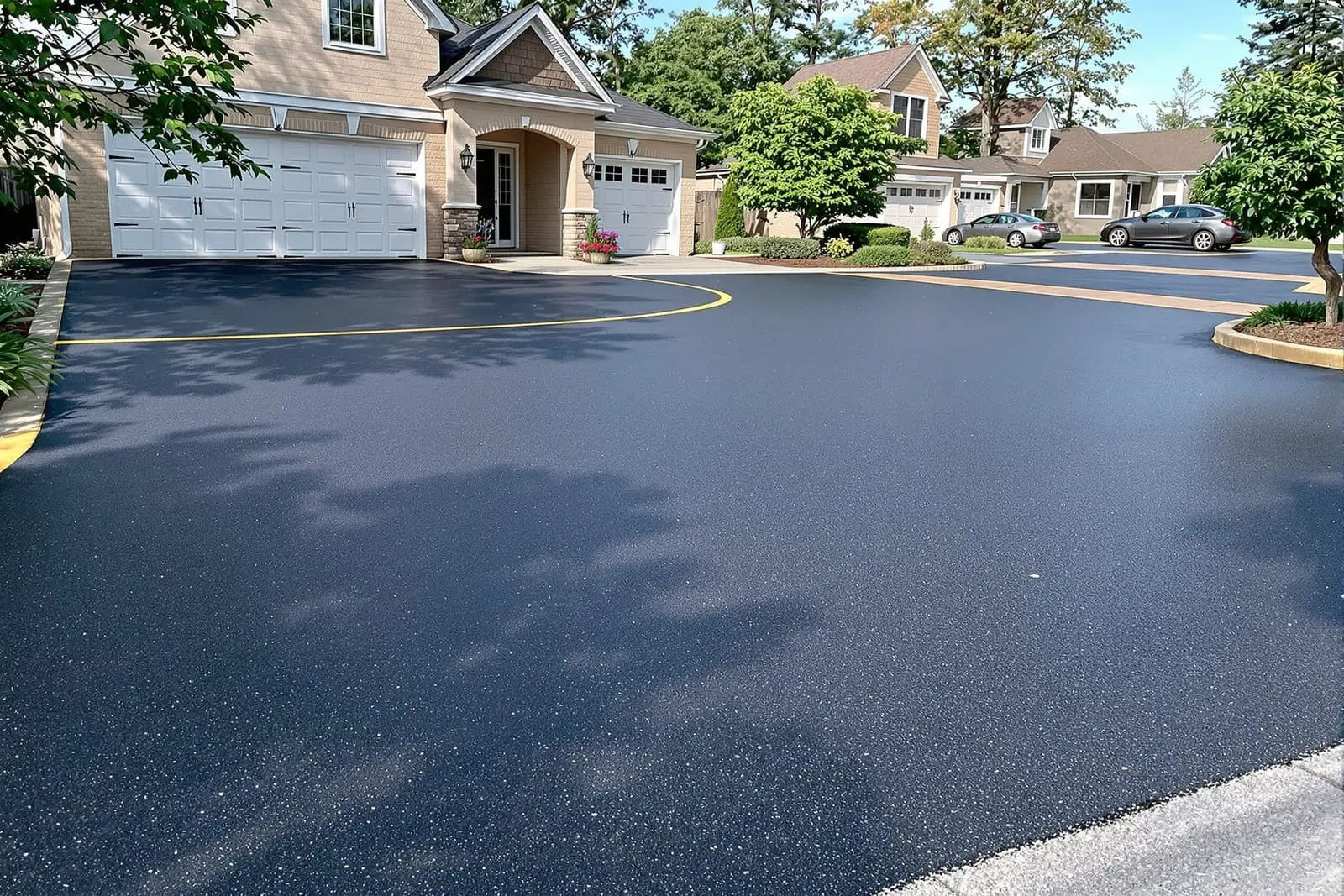
Extend the life of your pavement with commercial asphalt resurfacing in Pittsburgh, PA. We repair major failures, adjust low spots, and apply overlay systems to restore smooth travel lanes and parking areas. This approach can save money compared to complete reconstruction.
Prestige Asphalt Pittsburgh provides professional commercial asphalt resurfacing throughout Pittsburgh, PA and the surrounding area. Our licensed, insured crew delivers safe, clean, on-time work with a free estimate before anything begins. Call (412) 561-9577 or request your free quote.
Commercial Asphalt Resurfacing for Pittsburgh Properties
Commercial asphalt resurfacing and overlays are usually the right choice when your pavement looks rough but the base underneath is still solid. Prestige Asphalt Pittsburgh focuses on this middle ground solution for local shopping centers, office complexes, warehouses, industrial yards, and church and school parking lots across the Pittsburgh area.
In this region, a lot of commercial pavement was installed in the 1980s and 1990s. The surfaces are worn from freeze-thaw cycles, rock salt, delivery truck loading, and winter plowing, but the stone base is often still sound. In those cases, resurfacing costs less and finishes faster than a full tear out, while still giving you a clean black surface and fresh striping.
Before we recommend resurfacing, our crew walks the site, cores the pavement if needed, and checks drainage. We look for rutting from buses or garbage trucks, ponding water spots, and signs of base failure like alligator cracking with movement underfoot. If your pavement just has age cracking, surface raveling, light to moderate depressions, and old patches, a commercial asphalt resurfacing plan is usually the best value.
How the Resurfacing & Overlay Process Works
A typical commercial asphalt resurfacing project with Prestige Asphalt Pittsburgh follows a clear series of steps so you know exactly what is being done on your property.
First, we clean and prep the surface. That means sweepers or brooms, power blowing, scraping off mud and debris, and milling or grinding high spots where new asphalt would otherwise create tripping edges at sidewalks or door thresholds. In older Pittsburgh plazas we often mill 1 to 2 inches along curb lines and in front of loading docks so that finished elevations match existing concrete and drains.
Next, we repair the worst areas before overlaying. Any sections with alligator cracking, soft spots, or potholes are cut out with a saw, dug down to the stone base, and rebuilt with new aggregate and base asphalt. If the subbase is pumping water, we add underdrain or regrade the stone so water has a path out. This step is critical in our climate, because trapped moisture will quickly break through a brand new surface when it freezes.
After repairs, we apply a tack coat. This is a thin layer of asphalt emulsion that bonds the old and new layers so the overlay behaves as one structure. Without a proper tack coat, overlays are more likely to slide or delaminate under heavy truck turning movements.
Then we place the overlay. For most commercial lots and light truck traffic we install 1.5 to 2 inches of new hot mix asphalt. For heavy truck lanes, loading areas, or bus routes we may recommend 2.5 to 3 inches, often in two lifts for better compaction. Mix types are chosen based on use: a tighter, finer graded surface mix for customer parking stalls, and a slightly coarser, stronger mix for drive lanes and loading areas.
Finally, we compact with steel drum and pneumatic rollers, adjust utility castings if needed, and stripe the lot once the surface has cooled. If we changed the grade at all, we test water flow with hoses before we leave so we can catch any low spots that should be corrected on the spot.
What Drives Cost on a Commercial Asphalt Resurfacing Job
Most of the cost for commercial asphalt resurfacing in Pittsburgh comes down to four main factors: thickness of the overlay, amount of base repair, site access, and traffic control.
Overlay thickness is the biggest material driver. A 1.5 inch overlay across a 50,000 square foot lot uses significantly less asphalt than a 3 inch build in truck lanes. On many local properties we design different sections so you are not overpaying: lighter overlay in regular parking, heavier sections only where heavy vehicles turn or stop.
Base repair is the second major factor. If most of your lot is structurally sound and only has scattered failed areas, we can confine full-depth patching to those locations, which keeps the project cost-effective. If more than about 30 percent of the surface is truly failed, we will be upfront that milling and more extensive reconstruction may be a better long-term choice.
Site access also matters. Tight urban lots in Pittsburgh neighborhoods, or downtown loading courts, may require smaller equipment or night work to avoid blocking adjacent businesses. That can affect labor time and scheduling. Open suburban plazas in places like Robinson, Monroeville, or Cranberry typically allow faster, more efficient production.
Traffic control and phasing are the last key drivers. Many property managers need to keep stores, clinics, or offices open while work is underway. We build phased plans so one section is resurfaced while another stays open, using temporary signage and clearly marked staging areas. This adds some setup time, but it keeps tenants operating and customers safe, which most owners consider well worth the tradeoff.
Common Problems We Solve on Pittsburgh Commercial Lots
Pittsburgh’s hills, snow, and frequent freeze-thaw cycles create specific asphalt problems that we see again and again, and commercial resurfacing and overlays are often ideal solutions if handled correctly.
Poor drainage is the first one. Older lots often have flat areas where water ponds after storms or snowmelt. Before overlaying, Prestige Asphalt Pittsburgh checks slopes with laser levels and string lines. If we see low areas, we can use fine grading of the existing surface, milling, or slightly varying overlay thickness to build a subtle slope to nearby catch basins. In stubborn cases we may recommend adding a new inlet rather than pretending drainage will improve on its own.
Another common issue is rutting and shoving where trucks turn, especially near loading docks, dumpsters, and drive-thru lanes. Simply overlaying these areas without reinforcing them will allow the ruts to come back quickly. In those spots we usually mill deeper, rebuild the base if needed, and install a thicker, stronger asphalt section. Sometimes we also suggest changing truck paths or adding concrete pads for dumpster and trailer stands.
Winter damage from plowing and deicing salt is the third frequent issue. Plow blades that are set too low gouge the surface, and salt accelerates surface raveling. When we resurface, we smooth out plow scars and choose mixes with appropriate air voids and binder content to resist further raveling. We also talk with property managers about plow blade shoes and more thoughtful salt use so the new surface lasts longer.
Finally, we see a lot of mismatched old patches and utility cuts that create a rough ride and tripping hazards. As part of an overlay project we can mill or feather these transitions, reset or raise manholes and inlets, and create a consistent finish that looks intentional instead of pieced together.
What to Know Before You Hire a Commercial Resurfacing Contractor
Before you hire anyone for commercial asphalt resurfacing in the Pittsburgh area, there are a few practical points to keep in mind so you get a result that performs as well as it looks.
Ask specifically how the contractor will check your base and drainage, not just the surface. A short walk-through is not enough on older properties with multiple additions. Prestige Asphalt Pittsburgh is comfortable coring pavement, probing stone base, and using simple level shots so we can explain exactly what is going on under the surface and how the overlay will interact with it.
Clarify where full-depth repairs will be made and how they will be marked. You should have a site plan or at least a marked-up aerial map showing areas that will be dug out versus those that will receive overlay only. This makes it easier to compare bids on an apples-to-apples basis and prevents surprise change orders.
Discuss schedule and phasing around your tenants or operations. In retail centers we often work early mornings or Sundays. For medical, industrial, or school campuses we design traffic plans that keep emergency access clear at all times. A contractor that understands Pittsburgh weather will also explain temperature limits for paving and the likelihood of rain delays, especially in spring and fall.
Finally, insist on details about mix types, overlay thickness, and striping layout in writing. You should know exactly what you are paying for, how thick the overlay will be in each area, and how long the contractor expects it to last with normal maintenance like crack sealing and sealcoating. A clear, specific scope is the best protection for your investment and sets realistic expectations for performance in our local climate.
“
Professional commercial asphalt resurfacing & overlays, done right the first time, quality materials, honest pricing, and results that last.
Prestige Asphalt Pittsburgh
Commercial Asphalt Resurfacing & Overlays Across Our Service Area