Home › Speed Bumps, Curbs, and Asphalt Accessories
Control traffic and organize your lot with asphalt speed bumps and curbs in Pittsburgh, PA. We install raised traffic calming features, wheel stops, and curb islands that integrate cleanly with your pavement. Thoughtful accessories can improve safety and protect buildings and landscaping.
Prestige Asphalt Pittsburgh provides professional asphalt speed bumps throughout Pittsburgh, PA and the surrounding area. Our licensed, insured crew delivers safe, clean, on-time work with a free estimate before anything begins. Call (412) 561-9577 or request your free quote.
Purpose-built asphalt speed bumps and accessories for Pittsburgh properties
Prestige Asphalt Pittsburgh installs asphalt speed bumps, curbs, and related accessories that are designed around how people actually drive and park on your property. Instead of dropping a few random bumps in the driveway, we start by walking the site with you, watching traffic patterns, and looking at problem spots like blind corners, steep slopes, and areas where pedestrians cross.
We focus on functional placement first. For example, in a shopping center lot near McKnight Road, we might place speed bumps before crosswalks and near storefronts, not in the main drive lanes where emergency vehicles need to move quickly. In an apartment complex in Bloomfield, we often use a series of lower profile bumps spaced 80 to 120 feet apart to keep speeds consistently down without making daily driving miserable for residents.
Curbs and accessories are chosen the same way. We recommend where to use concrete curb versus asphalt curb, where wheel stops are more effective than a full curb, and where line striping or reflective markers should be added so drivers can actually see what they are supposed to slow down for, especially at night and in winter conditions.
How asphalt speed bumps are actually built
For asphalt speed bumps, we are not dropping pre-made rubber blocks on the ground. Prestige Asphalt Pittsburgh builds each bump from hot-mix asphalt, shaped and compacted on site so it fits the lane exactly and survives repeated freeze-thaw cycles.
The process starts with layout. We measure lane width, mark the bump limits with paint, and confirm the height and profile with you. In Pittsburgh, the typical residential or private lot speed bump is 2 to 3 inches high, 12 to 24 inches wide, with a parabolic or gently sloped profile that allows plows to ride over without tearing it off the pavement.
Next we clean and tack the surface. Dust, loose aggregate, or oil spots are removed mechanically, then we apply a liquid tack coat so the new asphalt bonds to the existing pavement instead of shearing off in the first winter.
We place hot-mix asphalt in lifts, then hand-shape the sides and crown. Using lute rakes and asphalt lutes, we pull the mix into the layout, then compact with a vibratory plate and roller. We pay attention to feathering the bump edges so you get a gradual rise and fall, not a sharp lip that catches plow blades and low cars.
Finally, we allow cooling, then apply striping and reflective markings. Yellow or white thermoplastic or traffic paint is used to outline the bump, and we can add reflective glass beads or raised pavement markers so drivers see the bump even on wet nights on Route 51 or in a dim parking structure.
Curbs, wheel stops, and site-specific accessories
Curbs control water and vehicles, so we design them for both. Prestige Asphalt Pittsburgh installs several curb types depending on what your site needs.
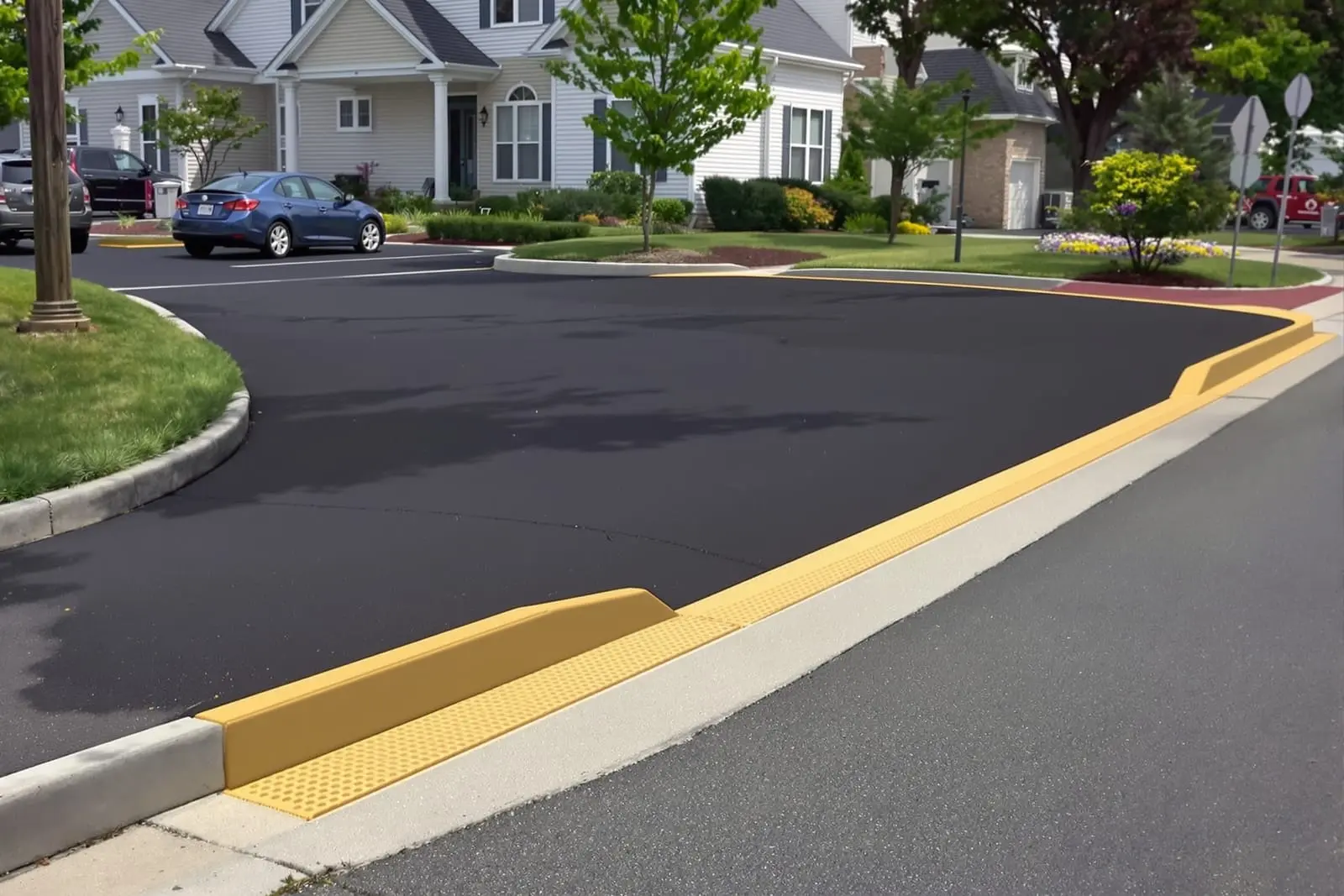
Asphalt berm curb (sometimes called asphalt ribbon curb) is built by placing a continuous strip of hot-mix asphalt along the pavement edge, then shaping it into a 4 to 6 inch high berm. This is cost effective for long runs along drive lanes and is flexible enough to deal with Pittsburgh heaving and minor settlement without cracking like rigid concrete.
Concrete curb and gutter, typically 18 to 24 inches wide with an integrated gutter, is recommended where you need stronger water control, such as along the low side of a sloped lot in Mt. Washington or where snowmelt needs to be directed to a catch basin rather than across a sidewalk.
Wheel stops (parking blocks) come in precast concrete, recycled rubber, or plastic. We drill and anchor them into the asphalt with rebar or spikes. These are used where a full curb is not practical, like in front of a building with existing sidewalks or at the head of spaces facing a retaining wall.
Accessories can include bollards around gas meters, sign posts set in asphalt or concrete footers, drainage grates, and ADA-compliant curb ramps. When we design a project, we look at the entire circulation pattern: where cars enter, where pedestrians walk, and where water flows when it rains or snow melts.
Pittsburgh weather, timing, and durability considerations
Local weather heavily influences how speed bumps and curbs should be built and when they should be installed. Prestige Asphalt Pittsburgh schedules most asphalt accessory work from late spring through early fall, when daytime temperatures are high enough for proper compaction and curing. Trying to install hot-mix in freezing weather leads to cold joints and early failures.
Freeze-thaw cycles in western Pennsylvania create movement in the base material and surface. To handle that, we make sure there is solid support under each bump and curb. If existing asphalt is already cracked and pumping water, we may saw cut and remove a strip, rebuild the base with compacted aggregate, then place the bump or curb on top of a stable foundation instead of on failing pavement.
Snow plows are another concern for any Pittsburgh property owner. When we build speed bumps on routes that are regularly plowed, we use tapered approaches, wider profiles, and clear reflective striping. We also recommend that property managers inform their plow contractors about the bump locations and height, and, when possible, keep plow blades slightly raised in those zones to avoid chipping.
Drainage is critical. Poorly placed curbs or bumps can trap water, which turns into ice sheets at night. During layout, we check slopes with a level or laser to ensure water has a clear path to an inlet or daylight. If a bump has to cross a drainage path, we may introduce slight notches or design a break in the curb line so water does not pond behind the new work.
Costs, options, and what drives your price
Pricing for asphalt speed bumps, curbs, and accessories is mostly driven by quantity, site condition, and complexity of layout. Prestige Asphalt Pittsburgh does not price by guessing over the phone. We prefer to walk the site, measure lengths and widths, and look at the existing pavement condition before giving a written quote.
For speed bumps, key cost factors include the number of bumps, their length across the lane, profile height, whether we are working on fresh asphalt or aged, cracked pavement, and how much traffic control is required during installation. Bumps located on busy access drives that require flaggers or work during off-hours will cost more than a few bumps in a small private lot.
Curbs and wheel stops depend on the type (asphalt berm versus concrete), the total linear footage, and whether we are installing on new asphalt that we just paved or retrofitting onto old pavement. Concrete curb and gutter requires forming, rebar, and finishing labor, so it tends to be more expensive per foot but it can solve long-term drainage issues.
Accessories like bollards, signage bases, and striping add smaller line items. Thermoplastic or epoxy striping is more expensive up front than standard traffic paint, but it lasts longer in high traffic locations like hospital emergency loops or grocery store entrances.
We lay out your options clearly, often with a base price for essential safety features like critical speed bumps and required ADA ramps, and a separate price for nice-to-have upgrades, such as decorative concrete curbs or additional signage. That way you can phase work as budgets allow without sacrificing key safety improvements.
What to expect when you hire Prestige Asphalt Pittsburgh
Our process is straightforward. First, we schedule a site visit, usually within a few days. We walk the property with you or your manager, note the problem areas, traffic patterns, drainage, and existing pavement condition, then discuss what you want drivers to do differently, such as slowing before a playground or keeping delivery trucks away from certain edges.
Next, we provide a written plan and quote. This usually includes a simple sketch or layout describing bump locations, curb runs, wheel stop locations, and markings. For multi-tenant properties in Pittsburgh, this layout can be shared with tenants or a board so everyone understands where the new controls will go.
On installation day, we begin with traffic control and clear communication to your users. For commercial lots, we often phase work so parts of the lot stay open, or we schedule work early morning to reduce disruption. Surfaces are cleaned, any necessary cuts or base repairs are made, then we install bumps, curbs, or accessories in the agreed sequence.
After compaction and cooling, we stripe and sign the site. We walk the finished work with you to confirm locations and quality. You receive basic maintenance guidance, such as how soon to allow traffic on the new features, how to keep paint visible, and what to tell snow plow contractors.
Prestige Asphalt Pittsburgh remains available after the job. If a bump settles oddly, a curb collects water, or a plow chips an edge, we can evaluate and handle adjustments or repairs. Our goal is that the speed bumps, curbs, and accessories actually change driving behavior on your property, last through Pittsburgh winters, and reduce your risk and headaches over the long term.
“
Professional speed bumps, curbs, and asphalt accessories, done right the first time, quality materials, honest pricing, and results that last.
Prestige Asphalt Pittsburgh
Speed Bumps, Curbs, and Asphalt Accessories Across Our Service Area