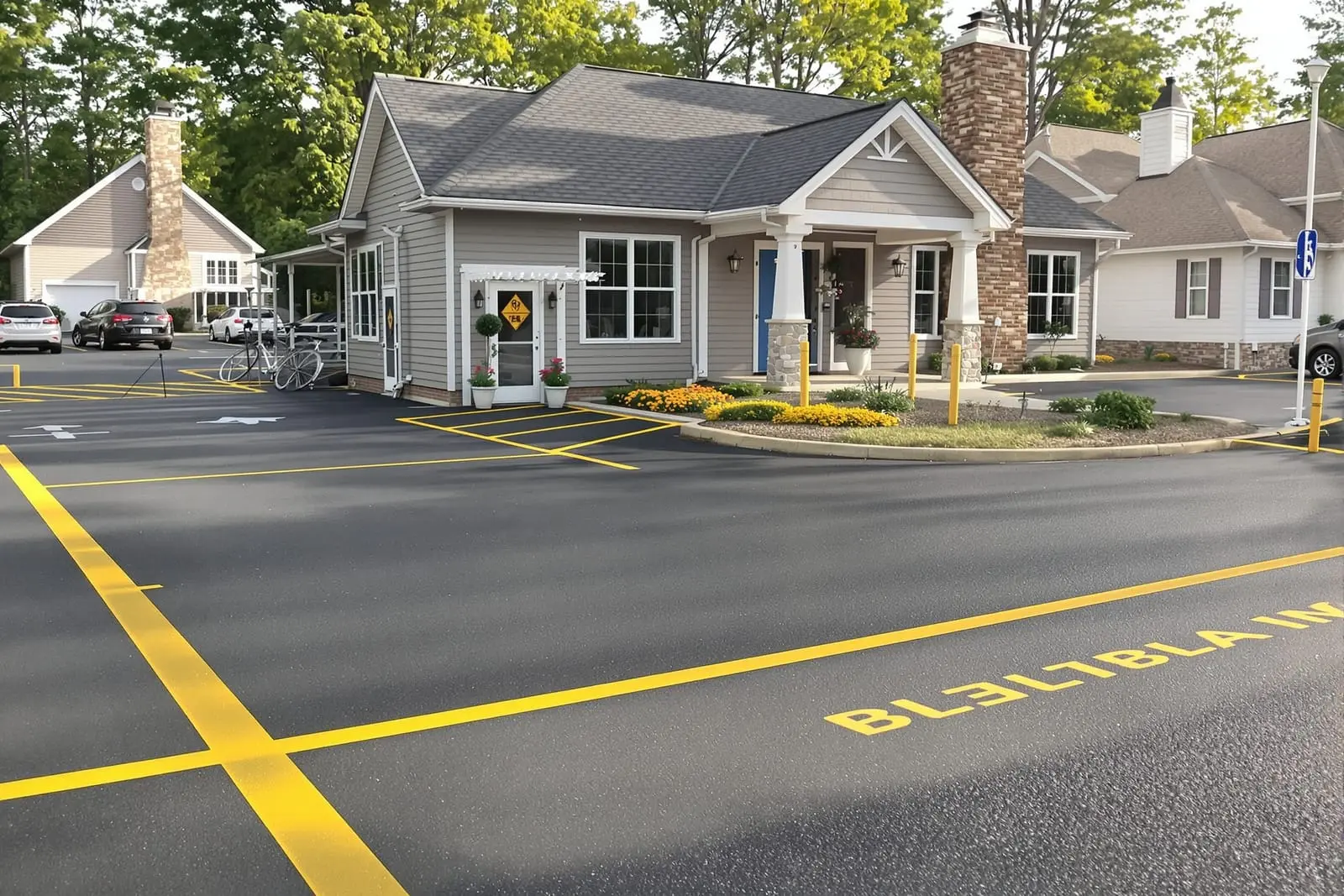
Improve safety and traffic flow with precise asphalt striping in Pittsburgh, PA. We layout stalls, fire lanes, loading zones, and ADA spaces to meet code and maximize capacity. Bright, crisp paint makes your lot easy to navigate and more professional.
Prestige Asphalt Pittsburgh provides professional asphalt striping throughout Pittsburgh, PA and the surrounding area. Our licensed, insured crew delivers safe, clean, on-time work with a free estimate before anything begins. Call (412) 561-9577 or request your free quote.
Asphalt Striping in Pittsburgh That Holds Up to Real Traffic
Asphalt striping is not just about straight lines and bright paint. In Pittsburgh, it has to stand up to snow, road salt, steep grades, and constant freeze-thaw cycles. Prestige Asphalt Pittsburgh focuses on striping that stays visible and functional under those conditions, so your lot stays safe and easy to navigate longer.
We handle everything from small retail parking lots in neighborhood business districts to larger commercial sites near the parkway. For each project, we start by walking the property with you. We look at how traffic actually flows, where backups or near-misses happen, and where pedestrians are crossing without clear markings. This helps us suggest practical changes, not just repaint what is already there.
Clear asphalt striping reduces fender benders, keeps fire lanes open, and helps customers find parking quickly. It also shows inspectors that you take ADA accessibility and fire code rules seriously. By working with a local crew that understands Pittsburgh winters and traffic patterns, you get markings designed for real use, not just for photos on day one.
How Our Striping and Pavement Marking Process Works
Prestige Asphalt Pittsburgh follows a specific process to make sure the striping bonds well and cures correctly in Western Pennsylvania weather.
1. Site evaluation and layout: We measure the lot, verify lane widths and parking space counts, and compare them to your needs and local codes. If we see tight turns, blind exits, or confusing two-way traffic, we recommend changes before a single line is painted.
2. Surface cleaning and prep: Good striping starts with clean asphalt. We blow off loose debris with industrial blowers, remove dirt and dust from wheel paths, and, if needed, power wash oil-heavy spots. If there are fresh crack sealants or sealcoat, we confirm they are fully cured so the paint does not peel. Any loose or flaking old paint is mechanically scraped or wire brushed so it does not telegraph through the new markings.
3. Layout and templating: We snap chalk lines or use laser guides for straight parking stalls, stop bars, and crosswalks. Stencils are laid out for arrows, numbers, ADA symbols, and wording like "NO PARKING" or "FIRE LANE." On tight Pittsburgh lots, we may dry-fit a section, then walk it with you before we paint so you can see how cars will move.
4. Application: For most parking lots in Pittsburgh, we use high quality waterborne traffic paint that cures well in our climate and holds color under road salt. For high wear areas, such as entrances, turns, and loading zones, we may recommend epoxy or specialty markings. Lines are applied with a line striping machine that controls width and thickness. We match standard widths for stalls, arrows, and symbols so the layout is consistent and compliant.
5. Dry time and reopening: Under typical Pittsburgh temperatures, fresh striping can be ready for light traffic in about 30 to 60 minutes, but we plan for at least an hour buffer. On cooler or more humid days, we extend that window. We cone off sections and help you stage traffic so customers and employees know where they can and cannot drive while paint cures.
Design Options, Layout Choices, and Compliance Details
There is no single layout that fits every Pittsburgh property. Prestige Asphalt Pittsburgh looks at how your customers use the space, what codes apply, and what future changes you might be planning.
Parking configuration: We can stripe standard 90 degree spaces, angled parking to improve traffic flow, and parallel spaces along building fronts or drive lanes. In tight city lots, angled parking often improves safety because drivers only move in one direction. We will explain tradeoffs between space count and ease of maneuvering before we paint.
ADA and accessibility: Accessible parking is not optional. We lay out ADA stalls with correct widths, access aisles, signage locations, and clear blue striping and symbols. We also make sure accessible paths from stalls to entrances are clearly marked with crosswalks or pavement symbols where appropriate. If your lot is on a slope, which is common in Pittsburgh, we pay close attention to where ADA spaces can legally be placed.
Traffic markings: We install arrows for one way drives, lane arrows for entry and exit, stop bars at intersections, and high visibility crosswalks. For businesses near schools, churches, or medical offices, we often add additional pedestrian markings for extra safety. We also mark loading zones, fire lanes, and no parking areas so enforcement is clear.
Numbering and custom markings: If you have assigned parking, we can add stall numbers or simple lettering. For multi-tenant buildings, we can mark "TENANT," "VISITOR," or business names within reason. All of this is laid out in advance so you know exactly what will be painted and where.
Local codes and inspections: While Pennsylvania does not have a single statewide striping layout, local municipalities and fire marshals have their own expectations. Because we work throughout the Pittsburgh region, we are familiar with common requirements for fire lane labeling, ADA counts, and access widths, and we adjust striping layouts accordingly.
What Affects Asphalt Striping Cost and Scheduling in Pittsburgh
Pricing for asphalt striping is not just an hourly rate. Several real factors drive cost, and understanding them helps you budget accurately.
Size and complexity: A simple, open parking lot with standard stalls and one entrance costs less per square foot than a tight, chopped-up lot with islands, multiple levels, or heavy stencil work. Each arrow, crosswalk, symbol, or custom word adds time and materials.
Condition of existing markings: Sometimes we can paint directly over faded lines, other times the old layout must be blacked out or changed. If you are converting two way traffic to one way, altering stall angles, or changing fire lane locations, there is more planning and layout time. Removing or blocking old lines so drivers are not confused may require extra labor and material.
Surface condition: If your asphalt is heavily cracked, oxidized, or full of oil spots, we may need additional prep. While we do not resurface the lot as part of striping alone, we may suggest crack repair or sealcoating first so the new markings last. In some cases we can stripe a rougher surface, but we will be honest about how that affects durability.
Paint type and thickness: Standard waterborne traffic paint is lower cost and suitable for many Pittsburgh properties. If you choose higher build paint, reflective beads, or specialty products for extreme wear areas, the material cost goes up but so does life span.
Timing and phasing: Striping after hours, on weekends, or in multiple phases so you can keep part of the lot open is often worth it, but there is some added cost for mobilizing more than once. Many Pittsburgh businesses schedule striping in the spring or early summer, once the freeze-thaw season is past, which is generally the best balance of temperature and dry weather.
Prestige Asphalt Pittsburgh provides line item estimates that spell out layout changes, paint types, prep work, and scheduled phases so you know exactly what you are paying for.
Local Tips Before You Schedule Asphalt Striping
Before you book asphalt striping in Pittsburgh, there are a few smart steps that will save you time, money, and frustration.
Pick the right season: The most reliable window for striping in our area is typically late April through October, when temperatures are more stable and surfaces dry faster. We can stripe outside that window on warmer, dry days, but we will not rush your project in poor conditions that will cause premature failure.
Plan around your busiest times: Think about when your lot is emptiest. For many offices, that is evenings or weekends. For restaurants and retail, early mornings often work better. Prestige Asphalt Pittsburgh can phase work so sections of your lot remain open and customers still have clear access.
Decide on layout changes early: If you want to add ADA spaces, convert to one way traffic, or carve out more pickup and delivery zones, tell us when we first walk the property. Layout changes are easiest and most accurate when they are built into the plan, instead of added on the day of striping.
Coordinate with other work: If you plan to sealcoat, patch, or mill and overlay your asphalt, striping should come last. New pavement or fresh sealcoat needs proper cure time before painting. We can help you sequence the work so you are not paying twice for the same area.
Ask about maintenance: Fresh paint does not last forever in Pittsburgh winters. We usually recommend a restripe every 18 to 36 months, depending on traffic volume and plowing. Keeping lines fresh not only looks better, it also makes snow plowing safer, because plow drivers can clearly see islands, curbs, and fire lanes even when light snow is down.
When you are ready, Prestige Asphalt Pittsburgh can inspect your lot, discuss layout options, and provide a clear written plan for asphalt striping and pavement markings tailored to your property and how people actually use it.
“
Professional asphalt striping and pavement markings, done right the first time, quality materials, honest pricing, and results that last.
Prestige Asphalt Pittsburgh
Asphalt Striping and Pavement Markings Across Our Service Area